Overview
Real-world super-resolution must recover visually plausible high-frequency details while remaining faithful to the image evidence available in the low-resolution input. However, diffusion-based restoration often requires multiple iterative denoising steps, which can make practical deployment costly.
DM-SR formulates real-world super-resolution through distribution matching, enabling a pretrained diffusion model to produce high-quality restoration results in a single inference step.
Distribution Matching for Super-Resolution
DM-SR uses distribution matching to bridge degraded low-resolution inputs and the clean high-resolution image distribution represented by a pretrained diffusion model. This allows the model to preserve the generative quality of diffusion-based restoration while substantially reducing inference cost.
The goal is not merely to sharpen an image, but to reconstruct visually plausible textures and structures that remain consistent with the degraded input content.
Visual Comparisons
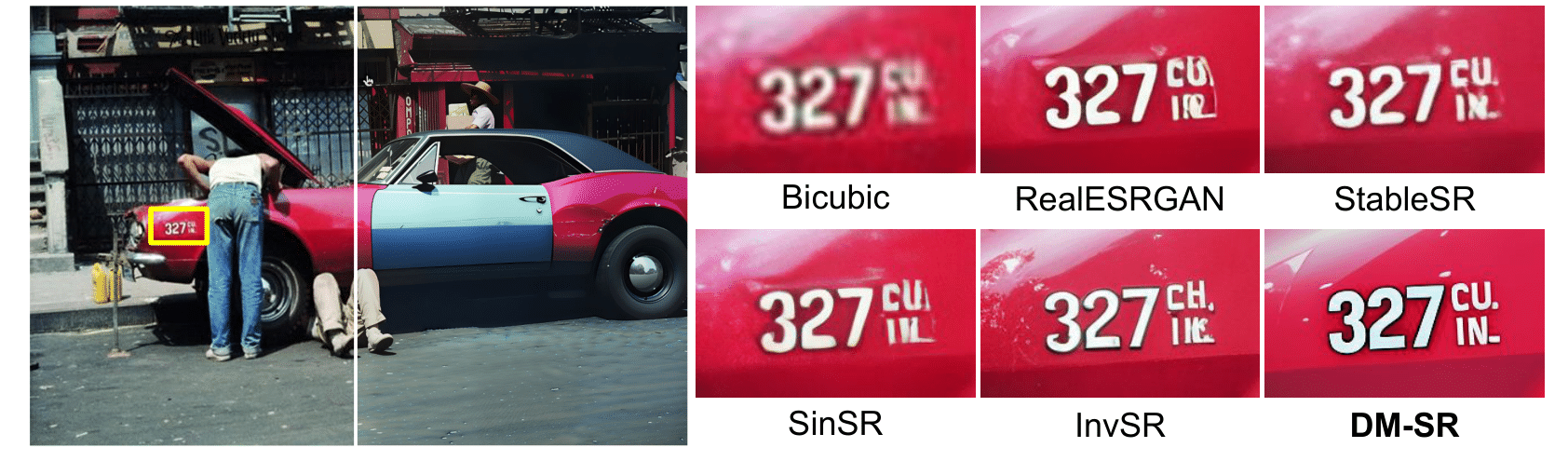
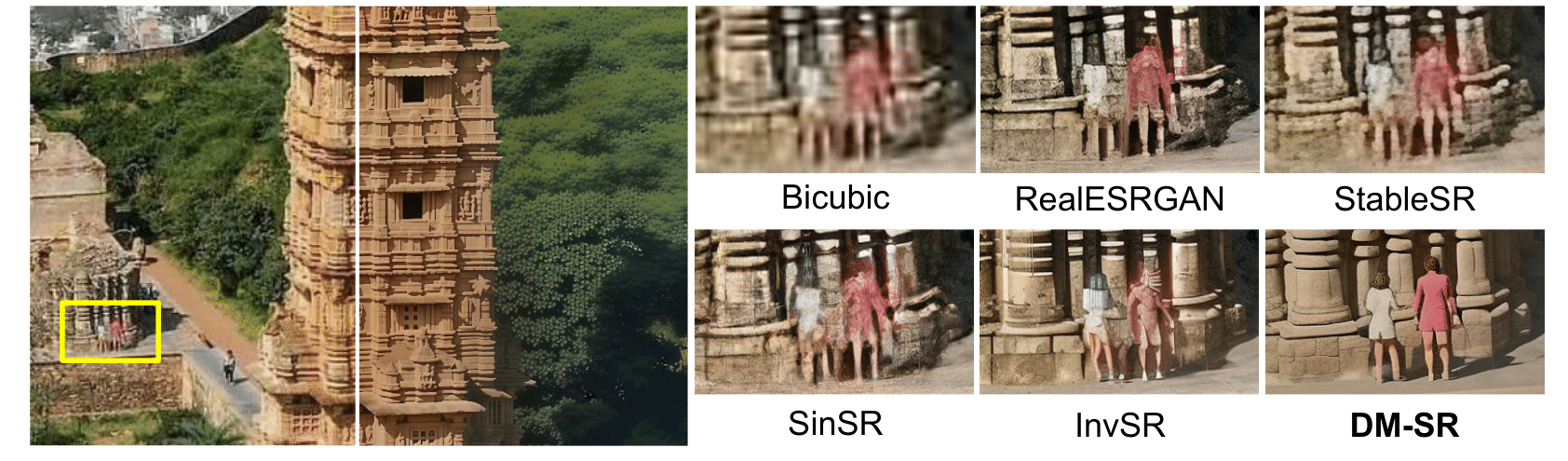
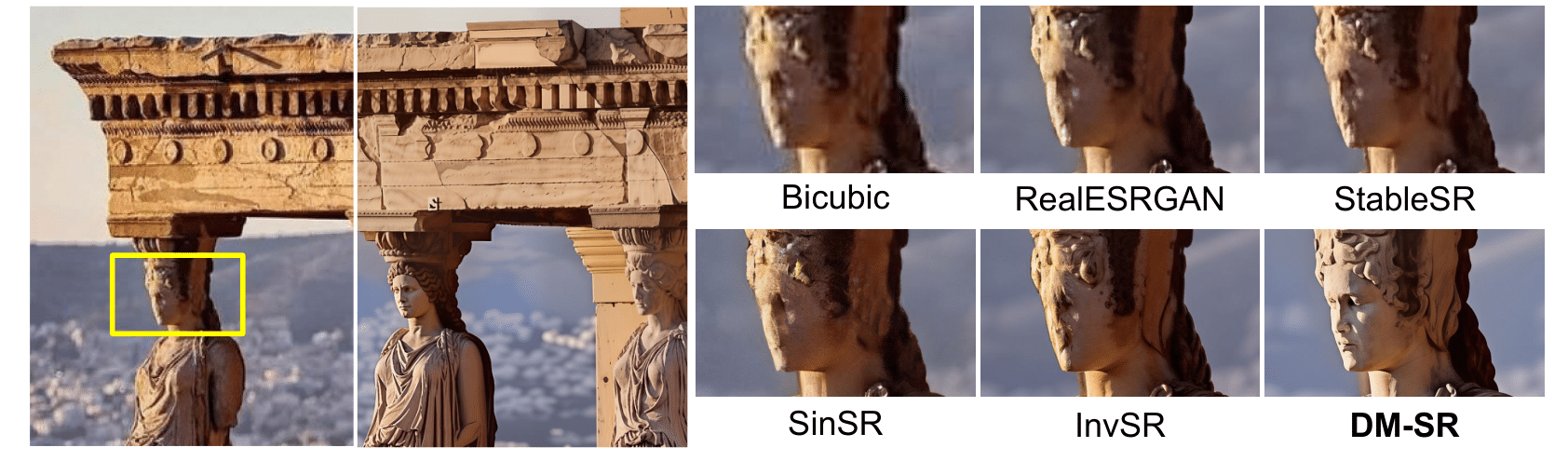
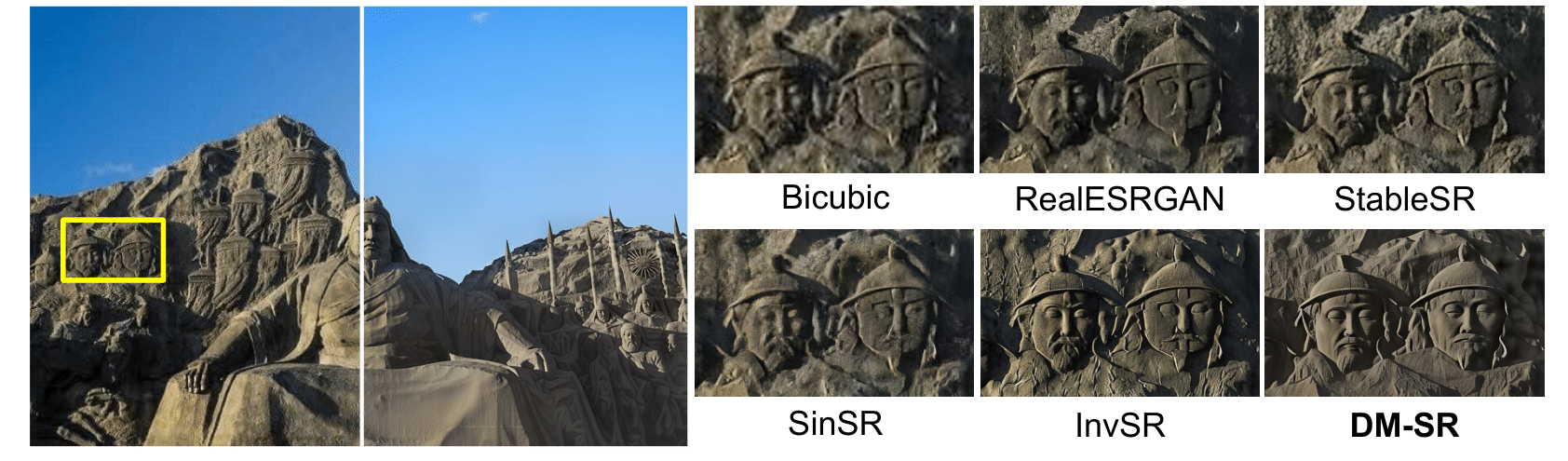
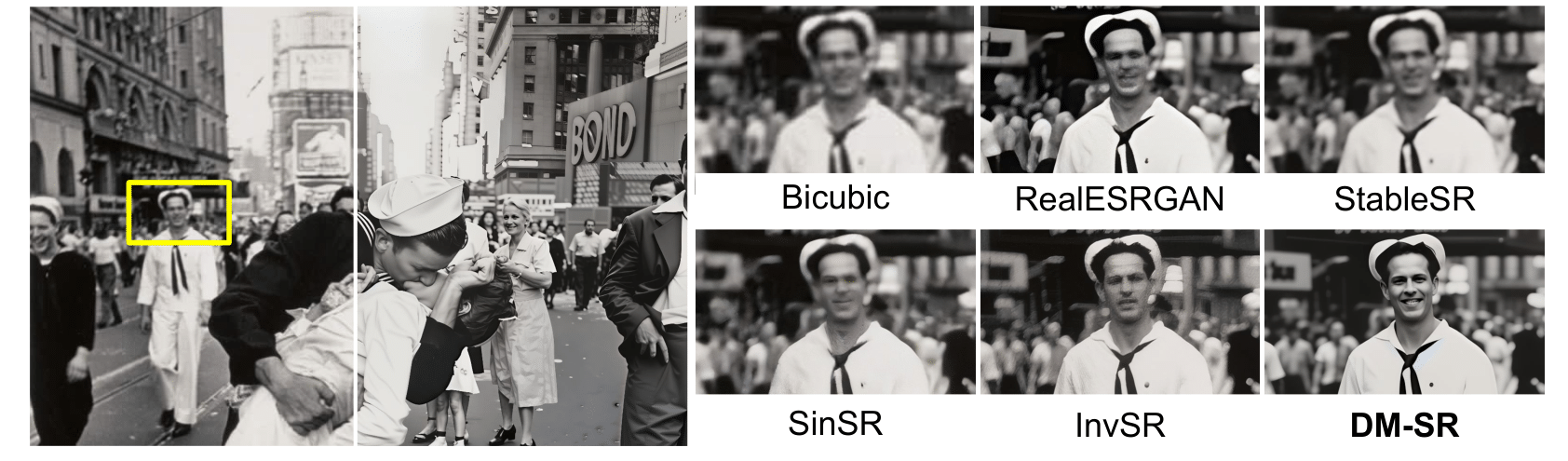
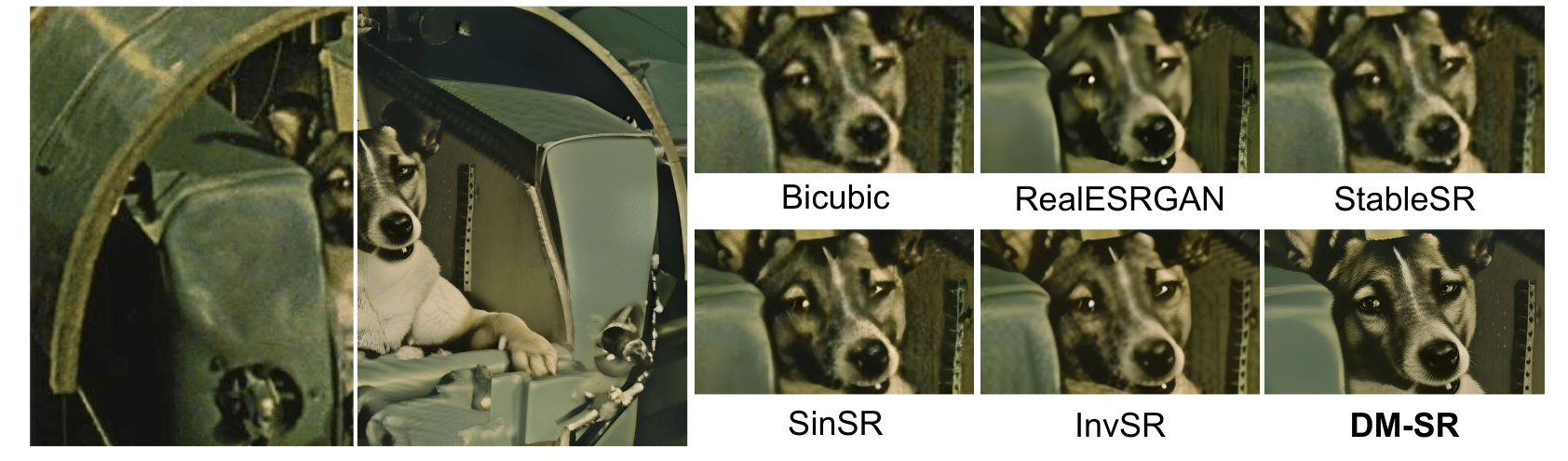
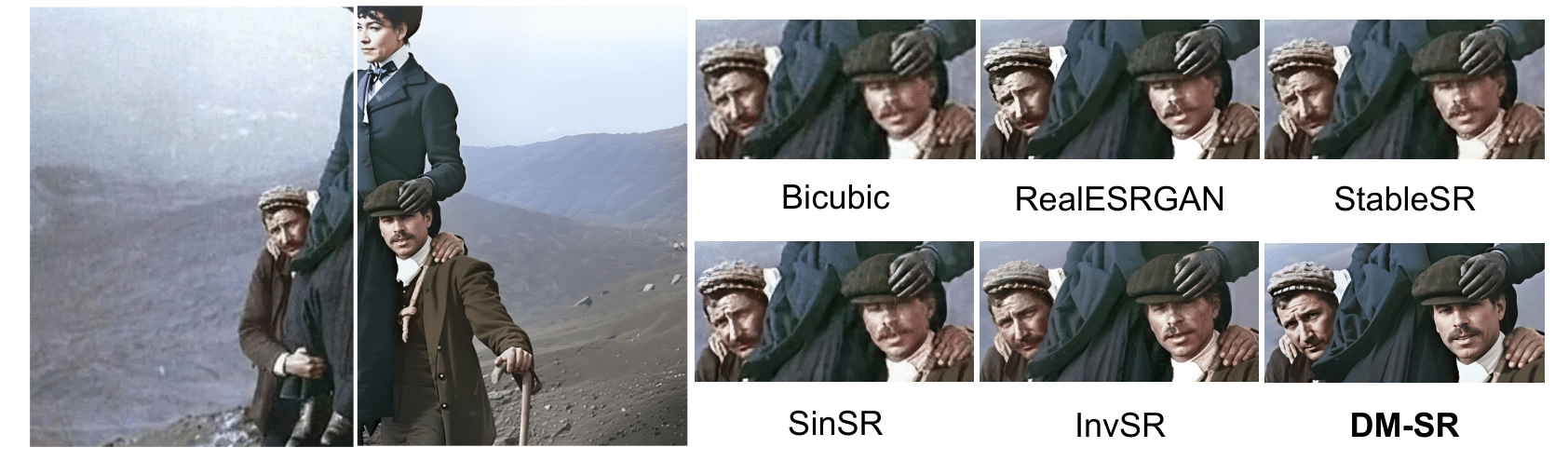
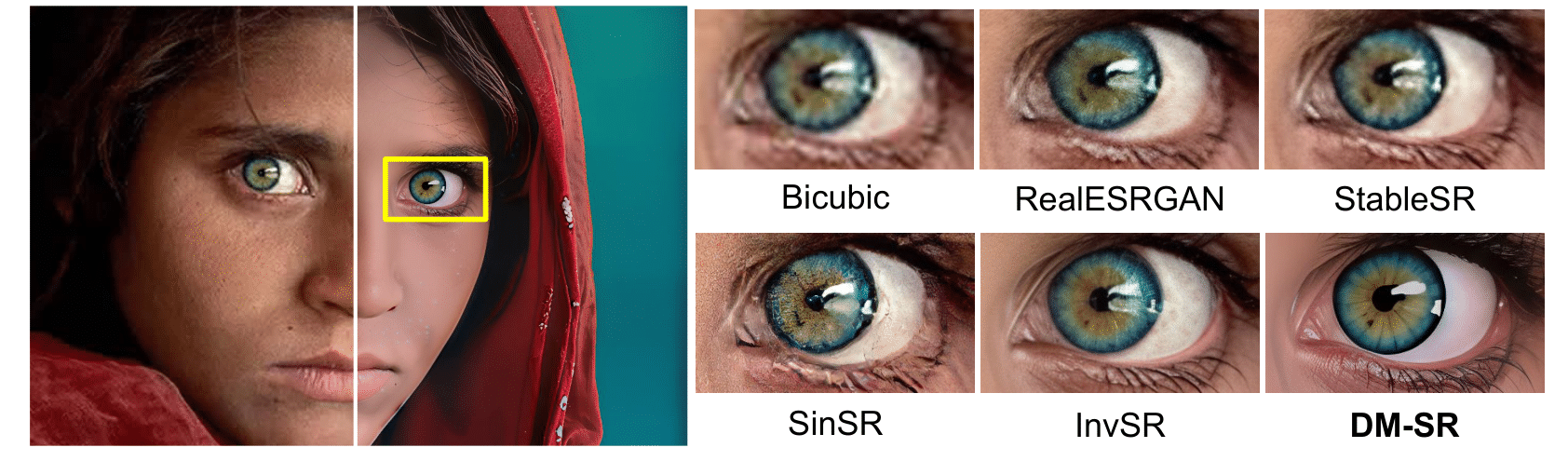
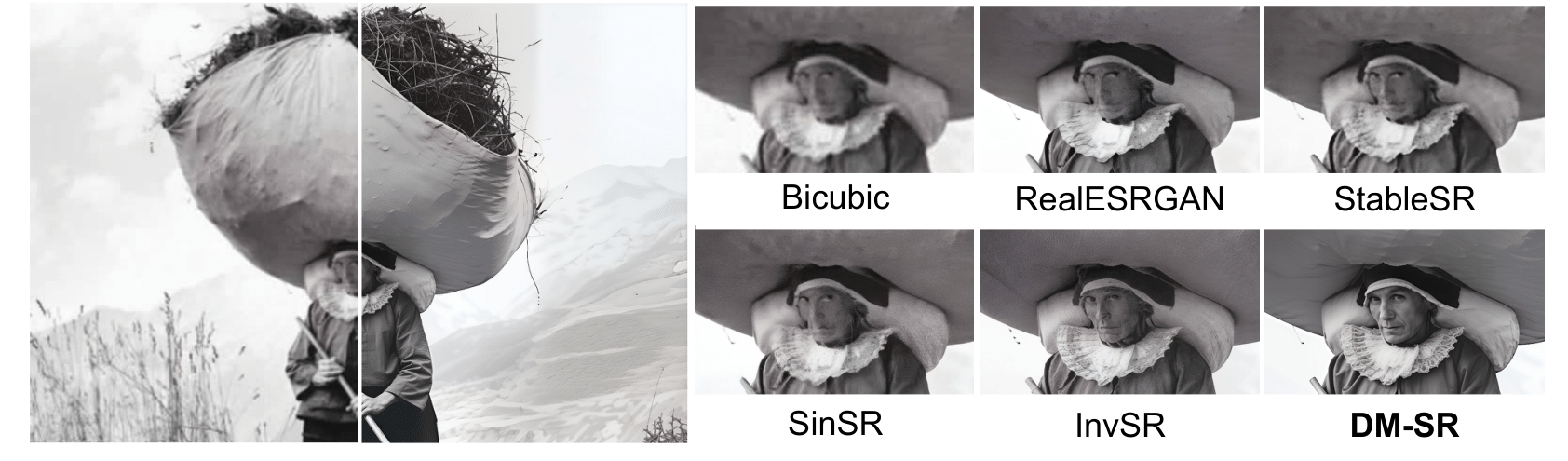
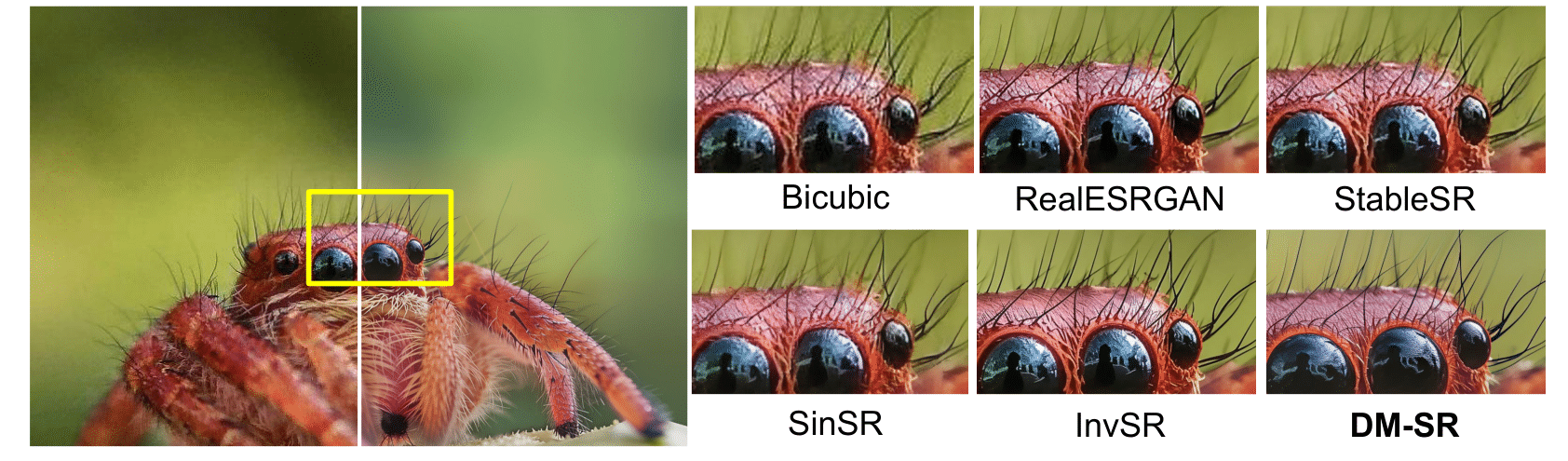
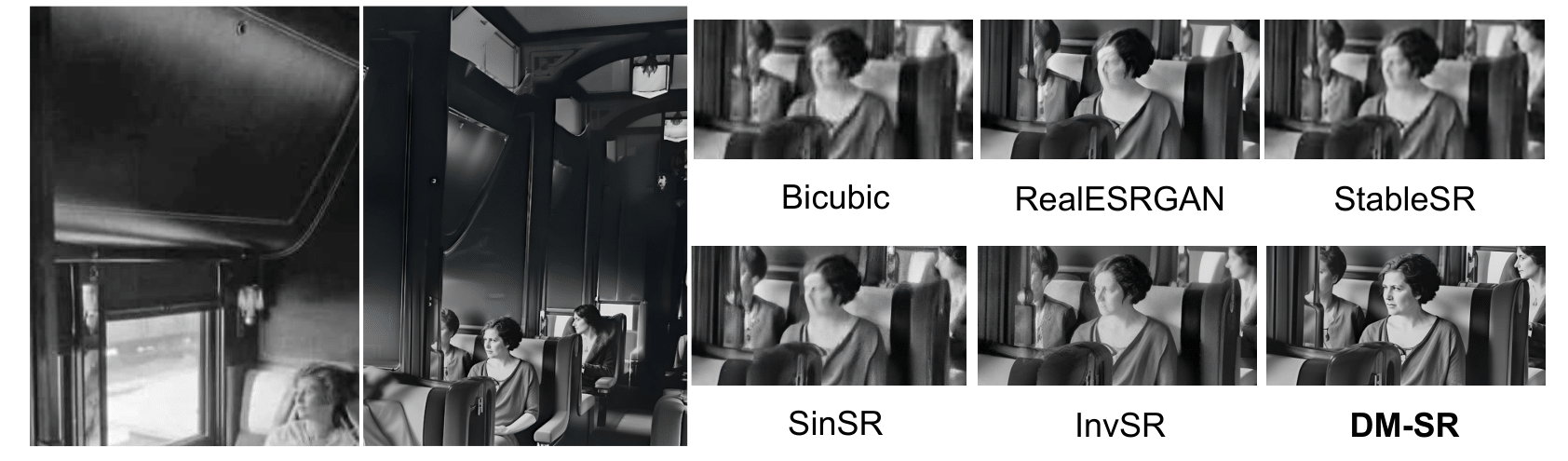
Each panel compares bicubic upsampling, representative real-world super-resolution methods, and our DM-SR result. The highlighted crop helps inspect difficult details such as text, boundaries, texture, and fine structure.